
Shock News! Leicester City Relegated to League One – A Shadow of Their Former Glory
Football stories are often filled with unexpected twists. Teams that once stood at the very top can fall within just a few seasons, and no example is clearer than Leicester City—a club that once delivered a miracle the football world will never forget.
In the 2015–16 season, Leicester City won the Premier League in the most unbelievable fashion in history. What seemed impossible odds became reality within months. They did not just win—they won with clarity, discipline, and the collective energy of a team playing beyond its perceived limits.
As the years passed, the image of that golden generation slowly faded. A structure that was once solid began to shake. A transition that looked manageable quietly turned into regression, and eventually, the unthinkable became reality.
Leicester City did not simply drop out of the Premier League—they fell all the way to League One. The question is no longer just “what happened,” but why a former champion ended up here, where the breaking point was, and whether they can ever return. This article walks you through every layer of the problem in detail.

The Leicester City players were extremely disappointed
From the 2015–16 Miracle to Leicester City’s Lowest Point
Leicester City’s Premier League title in 2015–16 was not just an achievement—it was a moment that reshaped the football world’s perspective. A team without global superstars, massive budgets, or expectations managed to consistently defeat football’s giants.
What powered their success was not just player form, but a perfectly aligned structure: a clear system, defined roles, and almost flawless discipline. Every player knew their responsibility and played toward a single shared goal.
However, sustaining such extraordinary success is never easy. Increased scrutiny, the departure of key players, and rising expectations forced constant adjustments—arguably the most critical phase in the club’s journey.
The decline began when the original structure was gradually replaced by incomplete systems. Recruitment decisions failed to deliver solutions, continuity was lost, and problems quietly accumulated until they became long-term damage.
A Success That Was Nearly Impossible to Repeat
The 2015–16 title was the result of multiple factors aligning at the perfect moment. Recreating those conditions was almost impossible, and as the club chased new expectations, the old balance slowly disappeared.
The Beginning of the Downturn
The problems did not appear overnight. They were built from a series of small decisions—player selection, tactical changes, and management choices—that collectively shaped the club’s long-term direction.
Structural Issues That Gradually Pulled the Club Off Course
Looking deeper, Leicester City’s decline was not caused by a single factor but by an interconnected chain of issues. What was once the team’s biggest strength—their structure—became a weakness when adaptation failed.
Frequent managerial changes disrupted tactical continuity. Players were forced to adjust repeatedly to new systems, leading to a noticeable drop in overall performance.
At the same time, certain recruitment periods failed to provide long-term solutions. New signings could not fully replace the original core, causing the team to lose its former balance.
These issues may have seemed minor individually, but together they created a force strong enough to push the club far from its original path.
Lack of Tactical Continuity
Too many changes prevented the team from developing a clear identity. Players could not perform at full potential while constantly adapting to new demands.
Misaligned Recruitment Decisions
Investments in the wrong areas prevented progression, and over time, the gap between Leicester and their competitors only grew wider.
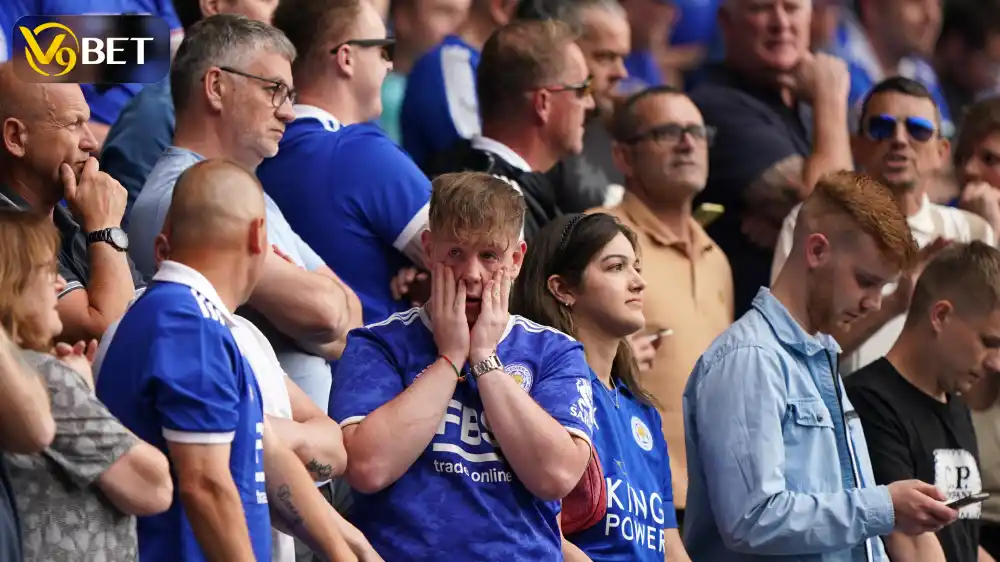
Fans were shocked by what happened
On-Pitch Performances That Revealed Every Hidden Problem
Ultimately, every issue manifested on the pitch. In recent seasons, Leicester City’s form exposed imbalance on all fronts—from blunt attacking play to defensive vulnerabilities.
Conceding avoidable goals, inconsistent chance creation, and repeated individual errors became familiar scenes. These were not just tactical issues but reflections of declining confidence and mentality.
As results worsened, pressure mounted, influencing decisions in subsequent matches. This vicious cycle made recovery increasingly difficult.
Read more: France: Reigning Runners-Up Still Strong Contenders for the 2026 World Cup
Leicester City’s Road Back – A Tougher Journey Than Expected
Relegation to the third tier is not merely a change in competition level—it represents a complete shift in context, from playing styles and environments to financial realities and fan expectations.
Leicester City can no longer rely on reputation or past glory. League One is filled with physically intense teams, compact stadiums, and relentless games that leave little room for elegant football. Former strengths may not translate effectively.
The biggest challenge is adapting to a different kind of football while maintaining standards. Failure to do so risks stagnation in the lower leagues—a fate many clubs have suffered.
Adapting from a Technical Side to a Results-Driven Team
Lower-league football does not reward possession-heavy or intricate play. Leicester must learn to play more directly, sharpen their efficiency, and handle increased physical battles.
Shifting the mindset from “playing well” to “getting results” is the key to survival.
Continuity and Belief
What the team needs most is not radical change, but stability. Players must trust the plan, and the club must allow time for rebuilding.
Success at this level usually belongs to teams with clarity, not those constantly reacting week by week.
Factors That May Shape Leicester City’s Long-Term Future
Leicester City’s future depends not only on on-field results but on strategic decisions at a structural level—long-term planning, resource management, and clear direction.
Clubs that bounce back quickly are those with unified plans from the outset. Managerial selection, youth development, and efficient resource use all play decisive roles.
The Role of Executives and Club Direction
Leadership decisions define every aspect of the club. Without a clear vision, change may only deepen existing problems.
Youth Development and Sustainable Rebuilding
Investing in youth systems builds long-term stability. Homegrown players often understand the club’s identity and can form the backbone of future squads.

Former Premier League champions 2015-16
A Bettor’s Perspective – Does Leicester City Still Offer Value on V9Bet?
From a betting standpoint, Leicester City’s relegation does not eliminate profit opportunities. On the contrary, it can create pricing inefficiencies for those who analyse deeply.
Big-name teams are often overrated, while poor form can push odds too low. The key lies in separating reputation from reality.
Assessing Real Form vs Reputation
Leicester may still be treated as a “big club” in lower leagues, influencing odds. Bettors must distinguish image from actual performance.
Choosing the Right Betting Moments
Some matches may heavily favour Leicester, while others pose greater risk. Smart betting relies on match dynamics—not club names.
Reading team momentum can significantly improve profitability on V9Bet.
Conclusion
Leicester City’s story perfectly illustrates modern football’s volatility. Within a short time span, the same club experienced historic triumph and dramatic collapse—from Premier League champions in 2015–16 to relegation to League One.
Their downfall was not triggered by a single cause, but by accumulated missteps: internal changes, inconsistency, and ineffective recruitment. Together, these gradually pulled the club away from its winning path.
Yet, a return to the top remains possible—if the club rebuilds with clarity, stability, and patience. A team that has once reached the summit still possesses the foundation to rise again.
For bettors on V9Bet, Leicester City’s situation demands deeper analysis. Reputation alone no longer reflects reality, and those who rely on real data and performance trends may find greater betting value.
Ultimately, Leicester City’s journey does not end with this relegation. The true question is how the club responds next—and whether this crisis becomes the beginning of a new chapter.